Cold Room Sandwich Panels: PIR vs. PUR vs. EPS Density, Thickness & Civil Defense
Fire-rated PIR polyisocyanurate panels (40–42 kg/m³ density, 0.022 W/m·K conductivity) represent the Saudi standard for walk-in chillers and freezers, passing Civil Defense flame-retardant inspections effortlessly—whereas cheap EPS polystyrene foam fails fire licensing and bleeds cold under 48°C ambient heat.
Why Thermal Envelope Integrity Governs Cold Room Operating Costs
Walk-in chillers and sub-zero freezers anchor food factories, commercial kitchens, pharmaceutical depots, and Bisha date packing warehouses across Saudi Arabia. Because warehouse interiors must stay at +2°C down to -25°C while outdoor summer roofs bake near 48°C, panel core chemistry and joint integrity dictate 70% of monthly compressor electricity bills.
Undersized insulation thickness or low-density core foam invites thermal bridging, ceiling condensation drips, creeping ice buildup around wall joints, and relentless compressor runtime that risks catastrophic stock spoilage worth millions of riyals.
- Thermal Conductivity (k-value): Lower conductivity translates directly into reduced heat gain per square meter of cold room surface.
- Core Foam Density: Commercial cold rooms require strictly 40–42 kg/m³ closed-cell core density to avoid warping and maintain cam-lock pull strength.
- Civil Defense Flame Rating: Mandatory fire-retardant certification required before commercial warehouse licensing across the Kingdom.
Core Foam Engineering Comparison: PIR vs. PUR vs. EPS
Despite looking nearly identical beneath painted galvanized steel skins, three sharply different insulation cores populate the Saudi market—and selecting the wrong panel chemistry can double monthly compressor draw or fail Civil Defense Salamah inspection:
1. Polyisocyanurate (PIR): The premier industrial standard utilizing cross-linked molecular rings that char rather than drip flaming droplets above 300°C—satisfying strict EN 13501 B-s1,d0 / B1 fire ratings required by Saudi Civil Defense inspectors on commercial kitchens, meat plants, and Bisha agricultural cold warehouses.
2. Standard Polyurethane (PUR): Offers strong thermal R-value comparable to PIR (0.022–0.025 W/m·K), making it viable for compact positive chillers when paired with certified steel cam-locks, but carries lower flame resistance (Class B2/B3) unless fortified with laboratory-tested flame-retardant additives.
3. Expanded Polystyrene (EPS): Cheap compressed white bead foam with poor mechanical rigidity, gradual moisture vapor absorption above 5% by volume, weak thermal resistance, and severe fire spread risk—rejected outright by Top Cleaners on regulated commercial cold rooms.
| Engineering Specification | PIR (Polyisocyanurate) | PUR (Standard Polyurethane) | EPS (Expanded Polystyrene) |
|---|---|---|---|
| Thermal Conductivity (W/m·K) | 0.020 - 0.023 (Superior) | 0.022 - 0.025 (Strong) | 0.035 - 0.040 (Weak) |
| Recommended Saudi Core Density | 40 - 42 kg/m³ | 38 - 40 kg/m³ | 16 - 24 kg/m³ Only |
| EN 13501 Fire Classification | B-s1,d0 Flame-Retardant | Class B2 Moderate | Class E/F Flammable |
| Joint Interlock System | Recessed Galvanized Cam-Lock | Cam-Lock or Tongue & Groove | Basic Butt Joint / Silicone |
| Moisture Vapor Absorption | < 1.0% by Volume | < 2.0% by Volume | > 5.0% (Waterlogged Over Time) |
| Thickness Needed for -18°C | 100 - 120 mm | 120 - 150 mm | 180 - 200 mm |
| Civil Defense & SFDA Licensing | Fully Approved Standard | Requires Extra Fire Reports | Rejected for Warehouses |
Selecting Panel Thickness by Target Room Temperature & Floor Load
Top Cleaners engineers match panel thickness strictly to operating Delta-T across every project: Positive chillers (+2°C to +8°C) for produce, dairy, and Bisha dates operate efficiently with 80mm to 100mm PIR cam-lock walls.
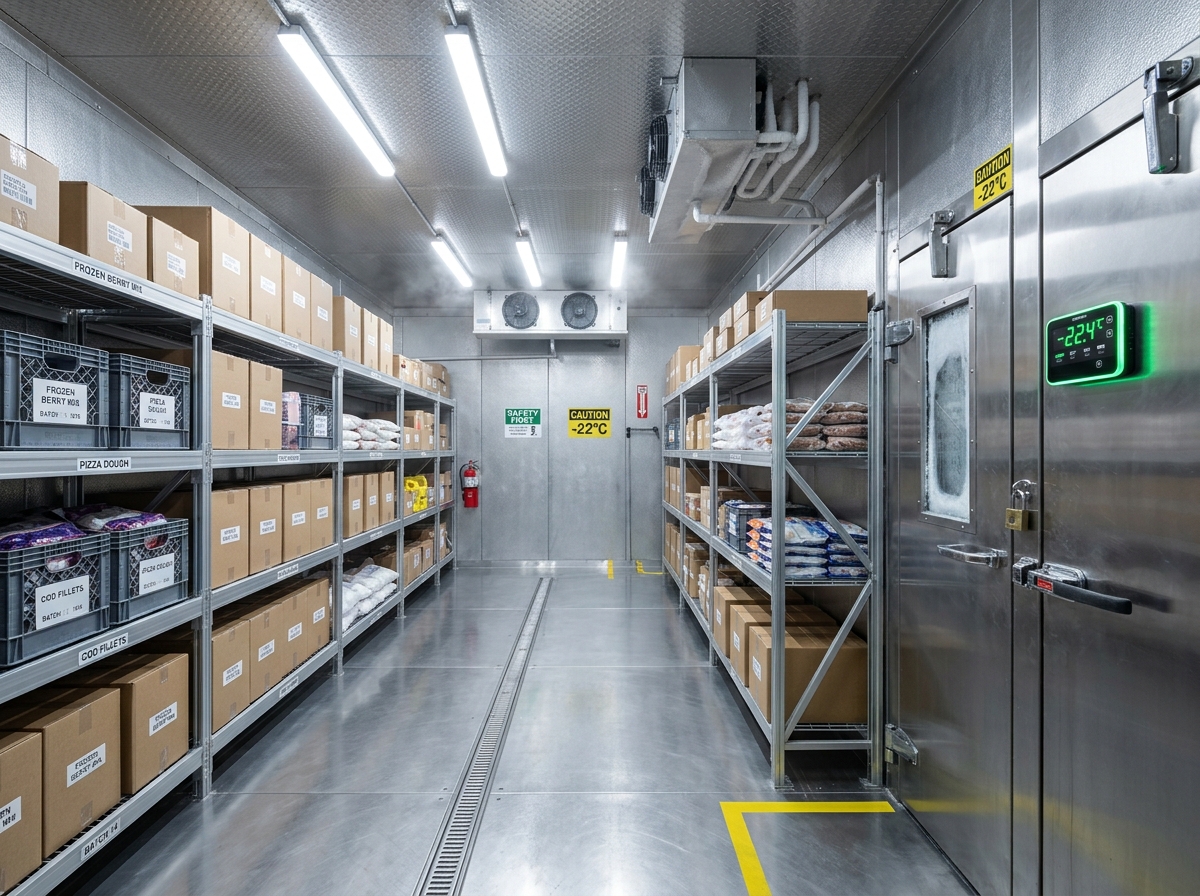
Sub-zero meat and poultry freezers (-18°C to -25°C) mandate 120mm to 150mm PIR walls paired with insulated sub-floor construction and anti-heave ventilation/heating pipes so concrete slabs never freeze and crack upward. Ultra-low blast freezers (-35°C to -40°C) require 150mm to 200mm panels with electrically heated door frame gaskets.
Top Cleaners Turnkey Construction & Hygiene Specifications
Every Top Cleaners cold storage room is erected with 0.5–0.6mm food-safe polyester-coated galvanized sheets, recessed high-tension mechanical cam-locks pulling seams airtight, and concave aluminum sanitary floor coving compliant with SFDA washdown inspection protocols.
Direct Service & Pricing Links
Frequently Asked Questions
Why does Saudi Civil Defense reject certain cold storage sandwich panels?
Inspectors reject flammable EPS foam cores and undocumented PUR panels lacking certified international UL, FM, or EN B-s1,d0 flame-spread test reports via Salamah safety submissions.
Can a -18°C freezer sit directly atop uninsulated plain concrete?
Never. Sub-zero temperatures penetrate bare concrete slabs, freezing groundwater underneath and causing destructive frost heave that buckles floors and cracks surrounding building columns.
How long do genuine 42 kg/m³ PIR cold room panels last?
Factory-foamed PIR panels routinely deliver 20 to 25+ years of stable insulation performance when cam-lock joints, door gaskets, and food-safe silicone seams are inspected annually.