Water Tank Leaks & Green Algae: Concrete Cracks, Sewage Risk & Food-Grade Epoxy
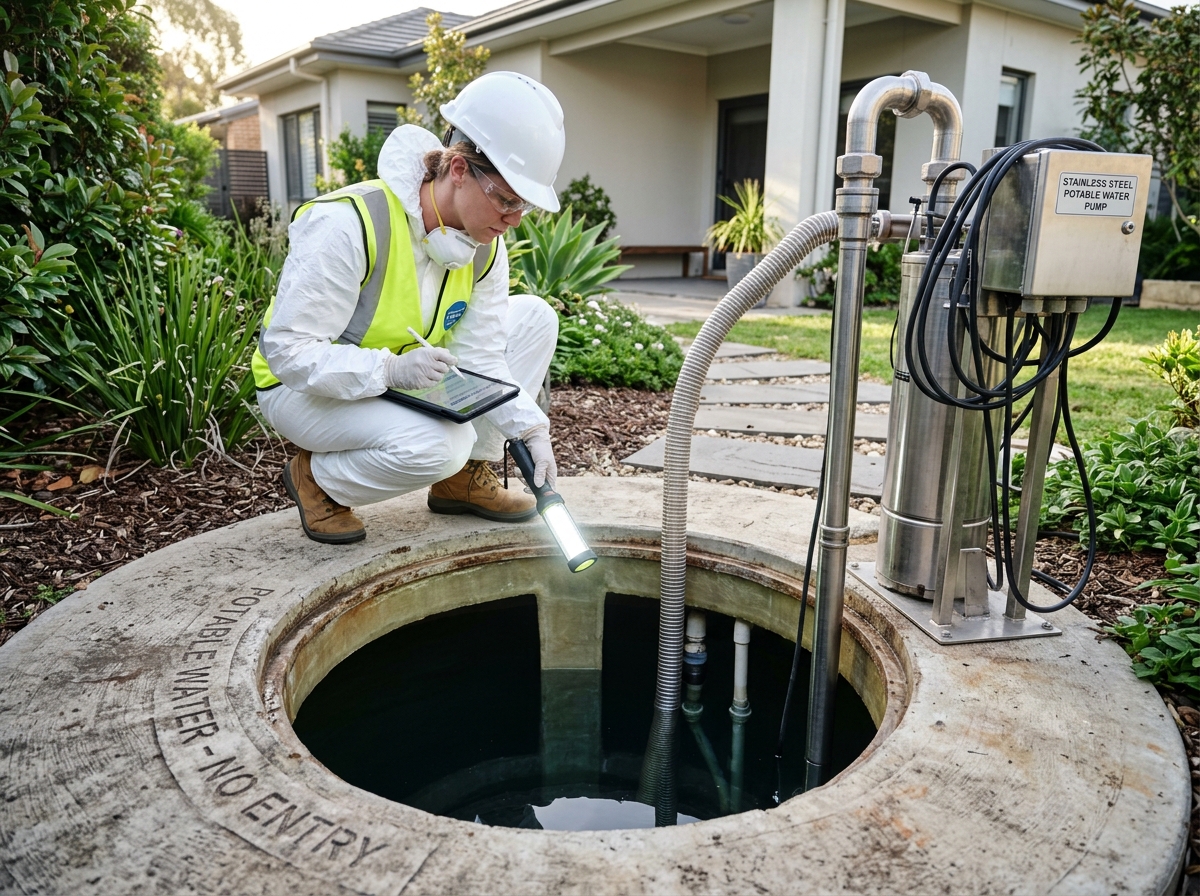
Foul tank water odors and sudden water losses usually trace to hairline concrete slab cracks letting groundwater or nearby septic moisture seep inside. Green algae in rooftop fiberglass tanks stems from UV sunlight leaking past loose covers. Lasting safety requires submersible pumping, chlorine disinfection, crack injection, and blue food-grade epoxy sealing.
Why Clean Underground & Rooftop Reservoirs Protect Family Health
Residential villas across Saudi Arabia pump desalinated city mains or tanker deliveries into concrete underground cisterns before boosting supplies upstairs to rooftop distribution tanks. Since that exact water feeds daily cooking, brushing, bathing, and laundry, tank integrity governs household hygiene for children and elderly residents alike.
Hidden buried reservoirs face constant soil settling and groundwater hydrostatic pressure that open hairline cracks along cold-pouring joints—allowing yard runoff or neighboring septic moisture to contaminate drinking water silently.
4 Primary Causes of Green Algae, Silt Sludge & Foul Water Odors
1. Sunlight Penetration Through Loose Rooftop Hatches: Green algae require direct sunlight for photosynthesis. Cracked fiberglass manhole lids or unlatched inspection hatches leak solar UV rays into warm rooftop water, coating inner walls in slimy green films.
2. Sub-Surface Septic & Groundwater Seepage: In neighborhoods lacking central municipal sewer networks, buried concrete tanks sit meters from septic pits; hair-thin mortar fissures permit coliform bacteria to infiltrate household supplies.
3. Stagnant Tanker Silt Accumulation: Fine sediment entering from water delivery trucks settles across cistern floors into dark organic mud hosting biofilm and tiny worms.
4. Toxic Coal-Tar / Bitumen Interior Coatings: Applying black bitumen waterproofing inside potable cisterns is hazardous—hydrocarbon solvents leach carcinogenic compounds and petroleum taste directly into water.
Top Cleaners Four-Stage Potable Sanitization & Food-Grade Epoxy Protocol
Following SASO and municipal health hygiene guidelines, our tank teams execute four controlled steps: First, high-flow submersible pumps drain water down while vacuum sludging bottom mud. Second, rotary brushes and pressure washers scrub algae and mineral scale from walls and stairs. Third, calibrated sodium hypochlorite chlorine solutions disinfect 100% of bacteria before neutral rinsing. Fourth, structural fractures are routed and packed with polymer cement mortar (Sika/Polycoat grade), sealed with two coats of solvent-free blue Food-Grade Epoxy certified safe for drinking water.
2026 Water Tank Cleaning & Epoxy Waterproofing Price Benchmarks
Indicative fair pricing across Asir, Al-Wadiyyin, Khamis Mushait, and Hafar Al-Batin:
| Tank Service Package | Typical Capacity | Certified Materials Applied | Estimated Cost |
|---|---|---|---|
| Rooftop Fiberglass Wash & Sanitize | 1,000 - 3,000 Liters | Food-safe chlorine & UV lid check | 150 - 250 SAR |
| Underground Concrete Tank Scrub | 1 - 2 Tanker Cisterns | Submersible drain + pressure wash | 300 - 500 SAR |
| Full Villa Bundle (Upper + Lower) | Standard Family Villa | Sludge vacuum + dual disinfection | 400 - 650 SAR |
| Food-Grade Blue Epoxy Waterproofing | Includes crack mortar rebuild | Solvent-free blue potable epoxy (2 coats) | 1,200 - 2,500 SAR |
| Electronic Leak & Nitrogen Test | Cistern & booster supply loop | Acoustic & pressure leak detection | 200 - 300 SAR (Free w/ Seal) |
10-Year Structural Protection for Asir & Highland Cisterns
Across agricultural highland settlements like Al-Wadiyyin, Tandahah, and Ahad Rafidah, clay soil expansion stresses concrete reservoir seams seasonally. Pairing negative/positive-side crystalline mortar repairs with twin potable blue epoxy coats creates an effortless, mirror-smooth surface guaranteed leak-free for 10+ years alongside stainless floats and dust-sealed manhole gaskets.
- Exclusively solvent-free, lead-free blue potable epoxies approved for drinking tanks.
- Upgraded 304 stainless float valves and rubber-gasket dustproof top hatches.
- Issued written sanitization & waterproofing health certificates for villas and restaurants.
Direct Service & Pricing Links
Frequently Asked Questions
How often should villa water tanks be drained and disinfected?
Ministry of Health hygiene standards recommend cleaning and chlorinating underground and rooftop drinking water tanks every 6 months.
How long after epoxy waterproofing can we refill the underground cistern?
Two-coat food-grade epoxy requires 48 to 72 hours of forced air curing before crews rinse the hardened glaze and authorize refilling safely.
What warning signs point to an underground water tank leak?
Rapidly dropping tank levels with pumps off, unexplained municipal water bill spikes, and sunken interlocking courtyard tiles around the tank hatch.
Does epoxy waterproofing come with a written structural guarantee?
Yes. Every full crack-repair and dual-coat potable epoxy project carries a stamped 10-year written leakproof guarantee.