Saudi Building Code (SBC 501 / 601) HVAC Piping, 19mm Insulation & Drainage Rules
Saudi Building Code SBC 501 and SBC 601 mandate seamless Type-L ASTM B280 copper lines wrapped separately in 19mm closed-cell elastomeric foam with UV metal cladding outdoors, 24-hour 400–500 PSI dry-nitrogen leak hold tests, and dedicated 1-inch PVC condensate drains fitted with P-trap odor seals.
How Saudi Building Code Enforcement Transformed Villa Quality
Enforcing the Saudi Building Code (SBC) represents one of the most consequential engineering reforms across Kingdom residential construction. Previously, rough-in split AC lines inside new villas were installed without checks on copper wall thickness, pipe insulation thickness, or drain slope—causing damp wall blistering, indoor mold, and chronic refrigerant leaks during a family's very first summer.
Today, full compliance and documented supervision under the Saudi Mechanical Code (SBC 501) and Energy Conservation Code (SBC 601) are mandatory before obtaining a Building Completion Certificate and permanent electricity meter connection.
- Saudi Mechanical Code (SBC 501): Governs HVAC system engineering, refrigerant copper lines, condensate routing, and bathroom/kitchen exhaust ducting.
- Saudi Energy Code (SBC 601): Enforces minimum SEER ratings, pipe R-values, and airtight duct sealing—trimming cooling energy loss up to 40%.
- Mandatory Supervision & Pressure Logs: Requires licensed mechanical sign-off on nitrogen pressure tests prior to closing masonry walls and gypsum ceilings.
Mandatory Copper Pipe, 19mm Insulation & Nitrogen Pressure Rules
SBC 501 specifies strict material standards for every concealed refrigerant line installed inside residential construction:
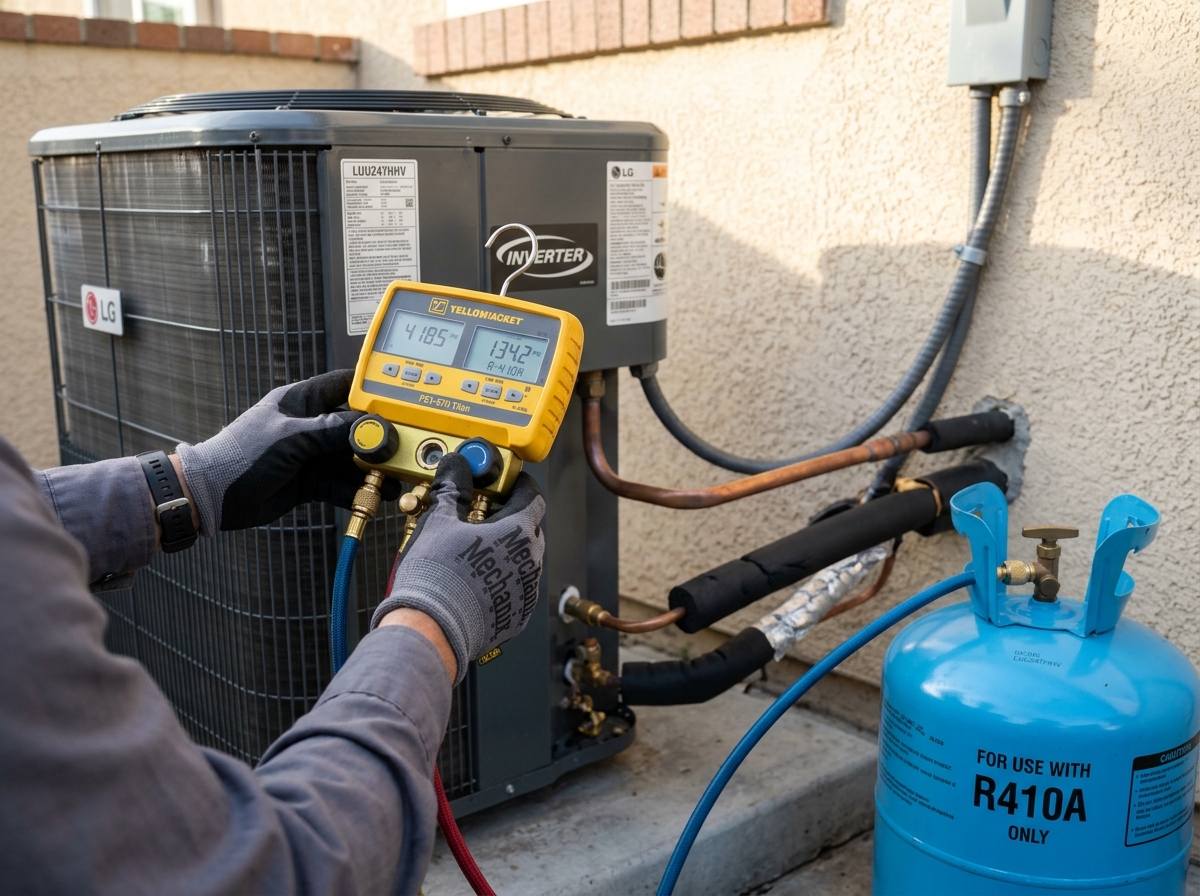
1. Seamless Type-L / ACR Copper Tubing: Only seamless Type-L or ACR copper conforming to ASTM B280 (0.81mm to 1.07mm wall thickness) may be embedded in walls—banning thin commercial copper prone to splitting under 450 PSI R-410A summer pressures.
2. Separate 19mm Closed-Cell Foam Insulation: Suction and liquid lines must each receive independent sleeves of closed-cell elastomeric rubber foam (Armaflex or K-Flex style) at least 19mm (3/4 inch) thick so moisture never condenses inside wall cavities.
3. Outdoor UV Metal Cladding: Rooftop exposed foam deteriorates to dust under six months of Saudi summer sunlight unless enclosed inside aluminum cladding or galvanized protection channels.
4. 24-Hour Dry Nitrogen Hold Test: Every brazed line set must hold 400 to 500 PSI of dry nitrogen for 24 hours without pressure drop before gypsum closure.
| Mechanical Item | Mandatory SBC Standard | Common Non-Compliant Shortcut |
|---|---|---|
| Copper Wall Thickness | Seamless Type-L (0.81–1.07mm) | Thin economy pipe (<0.6mm) risking bursts |
| Elastomeric Pipe Foam | 19mm (3/4") independent closed-cell | Cheap 6–9mm foam causing wet wall sweat |
| Line Wrapping Method | Separate sleeves for suction & liquid | Both pipes crammed into one shared sleeve |
| Rooftop UV Protection | Aluminum/galvanized UV cladding box | Exposed black foam crumbling in sun |
| Condensate Drain Routing | Dedicated 1-inch PVC + P-trap & 1% slope | Thin hose dumping onto roof tiles |
| Bathroom/Kitchen Exhaust | Rigid ducting outdoors with louver cap | Dumping humid air inside ceiling plenum |
Condensate Drainage & Mechanical Ventilation Requirements
SBC 501 prohibits tying AC condensate hoses directly into sanitary sewer stacks without an approved P-trap water seal and air break—blocking toxic sewer gas and drain flies from creeping back through wall units into bedrooms.
Horizontal drain lines must maintain at least 1 cm drop per meter (1% positive slope) so stagnant biofilm and Legionella algae never back up inside gypsum ceilings.
Top Cleaners SBC Rough-In & Engineering Inspection Services
Our Saudi Council of Engineers (SCE) certified HVAC team executes complete villa heat-load calculations (ASHRAE / SBC 601), Mueller USA and Thai seamless Type-L copper installations, 24-hour nitrogen hold certifications, and detailed commissioning audit reports ready for supervising engineering consultant sign-off.
Whether pre-piping a brand-new villa in Abha, Khamis Mushait, or Bisha or rectifying non-compliant copper lines before plastering in Jizan or Hafar Al-Batin, every Top Cleaners rough-in passes Municipal Building Completion inspection cleanly on the first review.
- Pressure gauge logs and time-stamped photos documenting 400–500 PSI dry-nitrogen hold prior to gypsum ceiling closure.
- Independent 19mm closed-cell elastomeric sleeves secured with UV-resistant metal channels across every exposed roof run.
- Dedicated 1-inch PVC condensate risers fitted with accessible cleanout tees and water-sealed P-traps.
Direct Service & Pricing Links
Frequently Asked Questions
Can municipal inspectors withhold a Building Completion Certificate over AC piping?
Yes. Missing 19mm separate insulation, unclad rooftop piping, unstrapped drain lines onto facades, or missing exhaust ducts under SBC 501 will halt final clearance until corrected.
Why is sharing one insulation sleeve for both copper pipes banned?
Cold suction gas exchanges heat directly with the warm liquid line inside a single sleeve, slashing net cooling output and boosting power draw by over 15%.
What is the maximum recommended copper line length for residential split units?
Most manufacturers rate residential splits up to 15–25 meters maximum pipe run, adding measured refrigerant per extra meter beyond the initial 5 meters.