Post-Sandstorm AC Care in Hafar Al-Batin: Fin Recovery & 50°C Compressor Protection
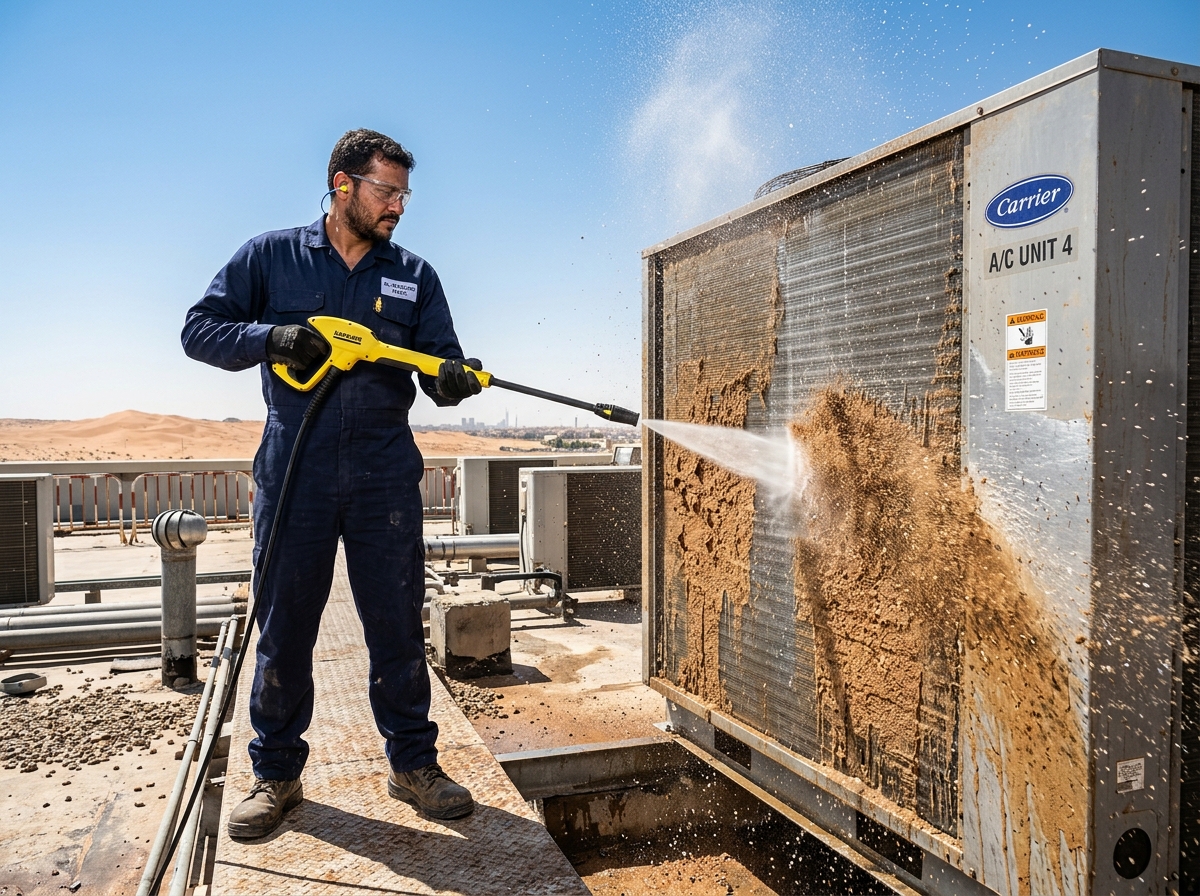
Severe Toz sandstorms in Hafar Al-Batin pack microscopic silica dust deep inside outdoor condenser coils, baking with morning dew into cement-like crust that blocks over 70% of heat airflow and drives head pressure past 450 PSI. Safe recovery relies on dry compressed air blowouts, neutral alkaline foam, controlled reverse rinsing, and fin combing.
The Harsh Continental Desert Climate of Hafar Al-Batin
Hafar Al-Batin and northeastern border towns experience one of the harshest continental desert climates on the Arabian Peninsula. Peak summer daytime temperatures routinely climb toward 50°C dry bulb, accompanied by violent seasonal dust storms locally known as Toz or Ajaj.
High-velocity desert winds sweep billions of fine silica particles (PM10 and PM2.5) directly into spinning outdoor condenser fans. Those microscopic grains wedge tightly between 0.15mm aluminum cooling fins. Once units shut off overnight and early-morning condensation settles on the metal, trapped dust cures into an insulating mud crust that prevents external air from cooling hot refrigerant vapor inside the condenser tubes.
- Discharge Pressure Surge: A mud-choked condenser drives R-410A high-side pressures well above 420–450 PSI.
- Thermal Overload Shutdowns: Compressor shell temperatures exceed 115°C, forcing the internal thermal protector to trip and leaving indoor vents blowing warm air at midday.
- Fan Bearing Sand Abrasion: Fine silica infiltrates condenser motor bearings, creating loud whining friction until fan motors seize completely.
Why Car-Wash High-Pressure Blasters Ruin Desert Condensers
Following major sandstorms, untrained casual laborers frequently haul 120-bar car-wash pressure blasters onto rooftops and aim straight jets directly at outdoor condenser louvers to speed through jobs.
High-pressure straight blasts effectively destroy split units. Outdoor aluminum fins measure under 0.15mm thick; angled 120-bar water flattens delicate pleats flat against one another like closed Venetian blinds. Once fins fold shut, rooftop airflow halts permanently, locking high pressures inside until the compressor fails unless a technician spends hours combing every square inch or replaces the coil outright.
| Service Stage | Top Cleaners Hafar Al-Batin Protocol | Unsafe Roadside Shortcut |
|---|---|---|
| Pre-Wash Unit Isolation | Breaker off, full dry blowout & waterproof PCB seal | Spraying live muddy circuits with tap water |
| Rinse Pressure & Angle | Controlled 30–45 bar fan nozzle held strictly perpendicular | 120+ bar pinpoint blast bending aluminum fins |
| Coil Chemical Agent | pH-neutral foaming alkaline cleaner lifting mud safely | Harsh acid coil brighteners pitting aluminum tubes |
| Flushing Airflow Direction | Inside-out reverse rinsing pushing sand outward | Outside-in spraying driving mud deeper inside coils |
| Fin Geometry Calibration | Precision fin-comb straightening across damaged zones | Leaving folded fins untouched after washing |
| Motor Bearing Service | Shaft cleaning, dielectric sealing & vibration check | Ignoring fan bearings until motor seizure |
Top Cleaners Four-Step Post-Sandstorm Recovery Protocol
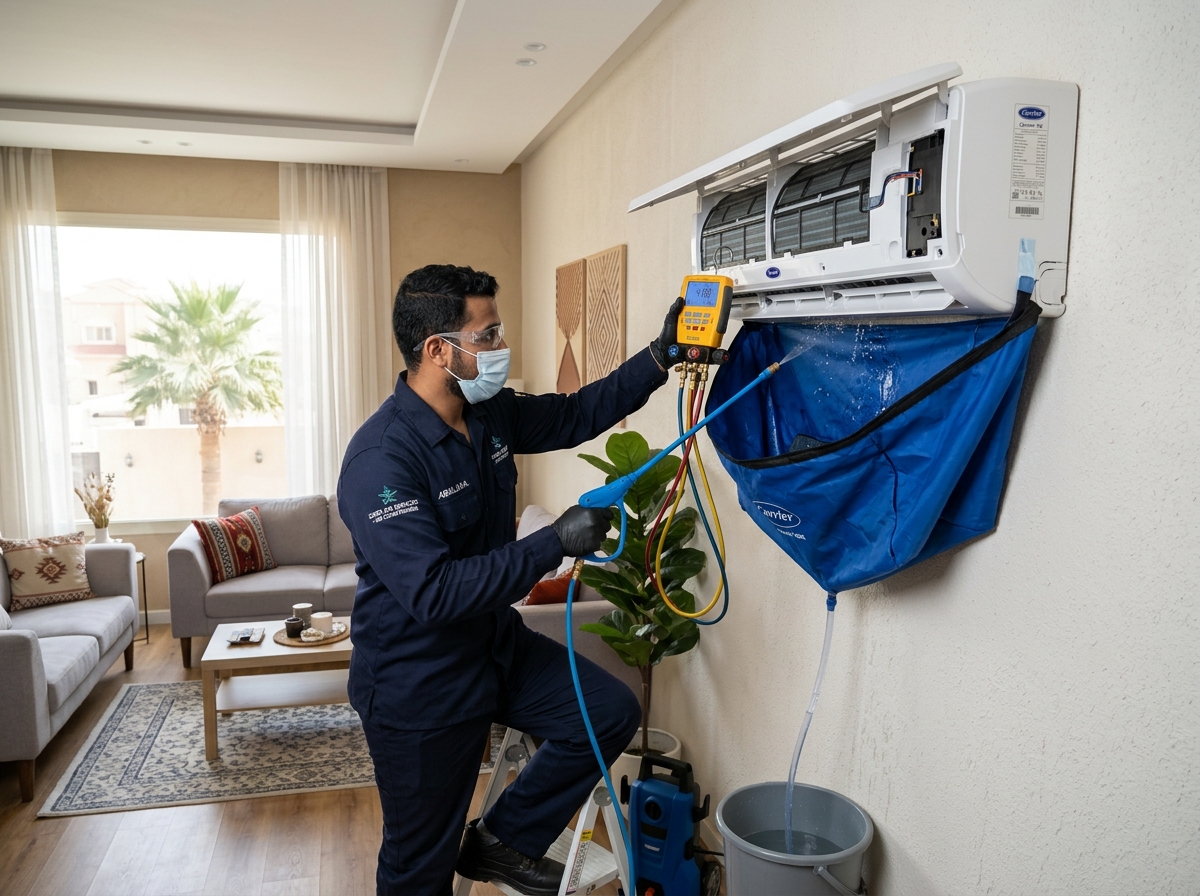
Our Hafar Al-Batin mobile vans execute a disciplined four-phase protocol after every regional dust event to restore factory heat-rejection capacity:
Step 1 — Dry Compressed-Air Blowout: Before touching a water hose, technicians blow dry trapped sand out of coil fins and electrical boxes so dust does not turn into thick paste inside the core.
Step 2 — Active Foaming Coil Soak: We inject non-corrosive expanding alkaline foam throughout the fin depth and allow 10 minutes for surfactants to lift baked clay and grease deposits.
Step 3 — Reverse Flow Rinse & Fin Combing: Technicians rinse strictly from inside the fan shroud outward at safe 35–45 bar pressure, then comb bent fin rows straight to restore full cubic feet per minute (CFM) airflow.
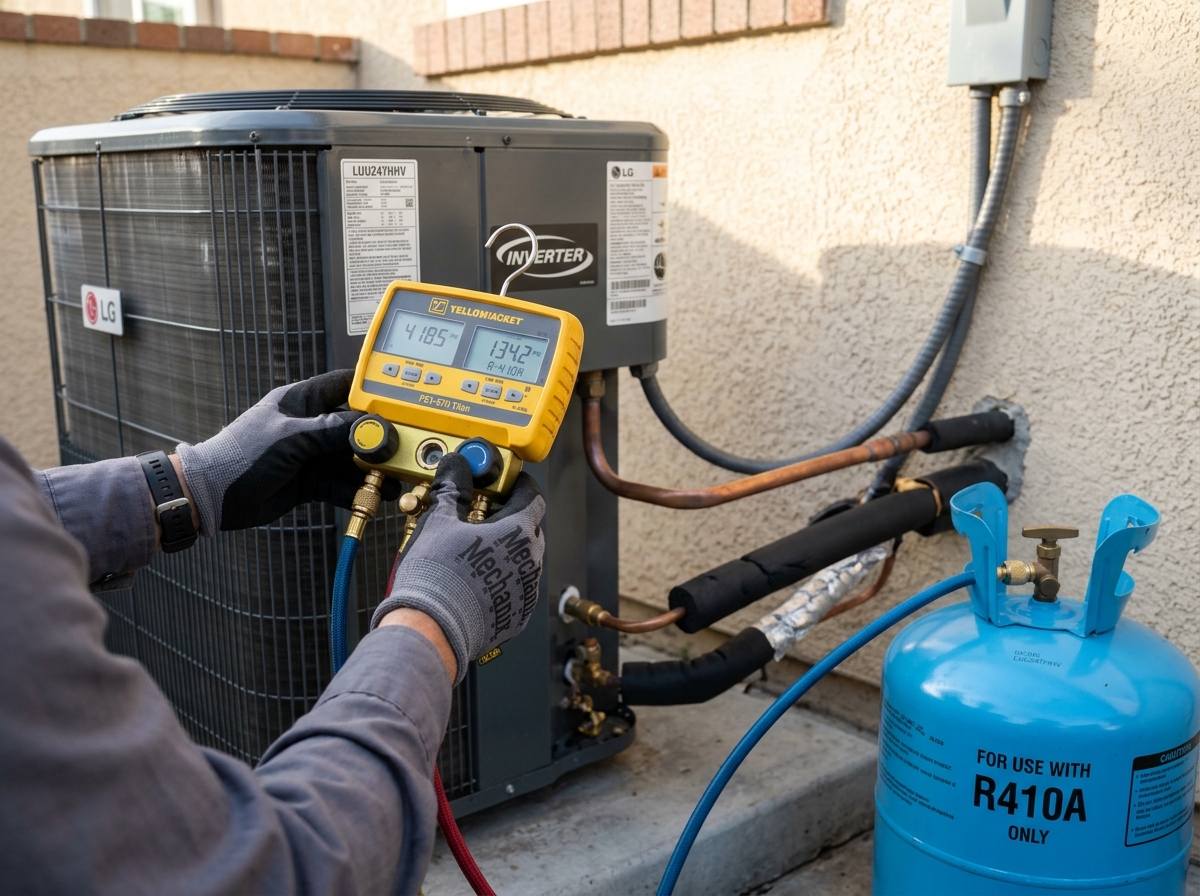
Step 4 — Peak Midday Amp & Pressure Verification: Finally, we clamp ammeters and attach digital pressure gauges under full heat load to verify healthy compressor draw and subcooling before handover.
Direct Service & Pricing Links
Frequently Asked Questions
Why does my Hafar Al-Batin AC trip off at 1 PM and restart every evening?
Dust-clogged outdoor condensers cannot shed heat when rooftop air approaches 49°C, driving compressor dome temperature above safety cutoffs until ambient heat cools after sunset.
Should homeowners install shade covers over rooftop AC condensers?
Elevated, open-sided ventilated canopies positioned at least 90–100 cm above the exhaust fan can reduce solar soak safely, whereas tight or boxed covers trap hot air recirculation and make trips far worse.
How frequently should AC units be washed during Hafar Al-Batin summers?
Plan one thorough chemical pre-summer deep wash plus a targeted condenser blowout and rinse immediately following each severe spring or summer dust storm.