2026 Balady & Civil Defense Rules for Commercial Kitchens & Exhaust Hoods
Saudi Balady and Civil Defense compel commercial kitchens to hold active preventive maintenance contracts, degrease exhaust ducts every 2–6 months with photo-verified certificates, maintain automated wet-chemical hood fire suppression linked to gas shutoff valves, and service stainless grease traps—avoiding fines reaching 50,000 SAR.
Saudi Municipal & Civil Defense Digital Enforcement Ecosystem
Commercial hospitality across Saudi Arabia now operates inside a unified digital compliance framework led by the Ministry of Municipalities and Housing (Balady / Mumtathel) and the General Directorate of Civil Defense (Salamah). Field inspectors check real-time digital portals before issuing new restaurant trade permits or renewing annual municipal licenses.
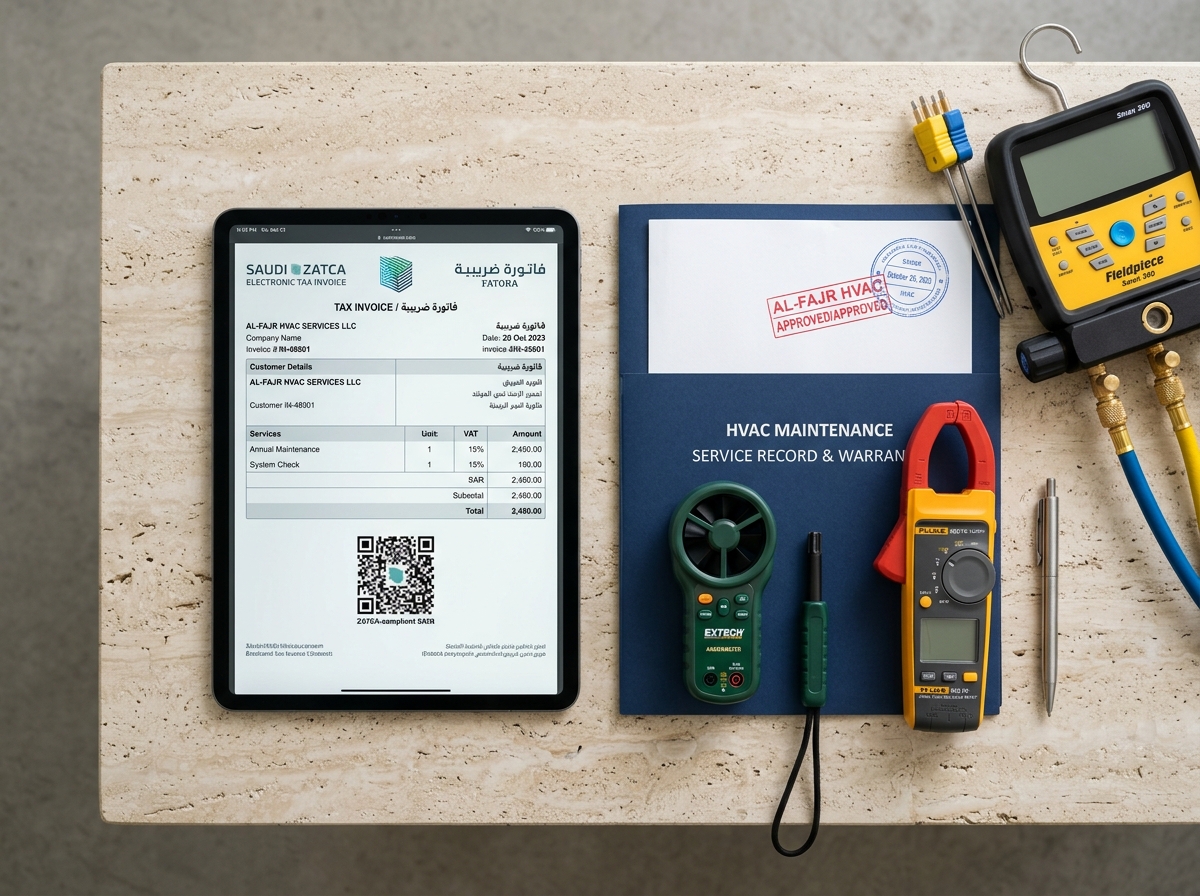
Restaurants, bakeries, cafes, and cloud kitchens can no longer rely on informal verbal handymen. Inspectors require stamped maintenance contracts, VAT invoices, and timestamped cleaning certificates verifying that exhaust ducts, rooftop extraction fans, LPG gas shutoffs, and grease interceptors meet national safety standards.
- Balady Permit Renewal: Active hood-cleaning and pest-control contracts are mandatory attachments for renewing food-service licenses.
- Civil Defense Salamah Portal: Fire suppression triggers and automatic central gas shutoffs must hold valid inspection reports from certified teams.
- Strict Penalty Tiers: Grease buildup creating a kitchen fire risk triggers municipal fines ranging from 5,000 to 50,000 SAR alongside immediate temporary closure.
Technical Specifications for Stainless Exhaust Hoods & Ductwork
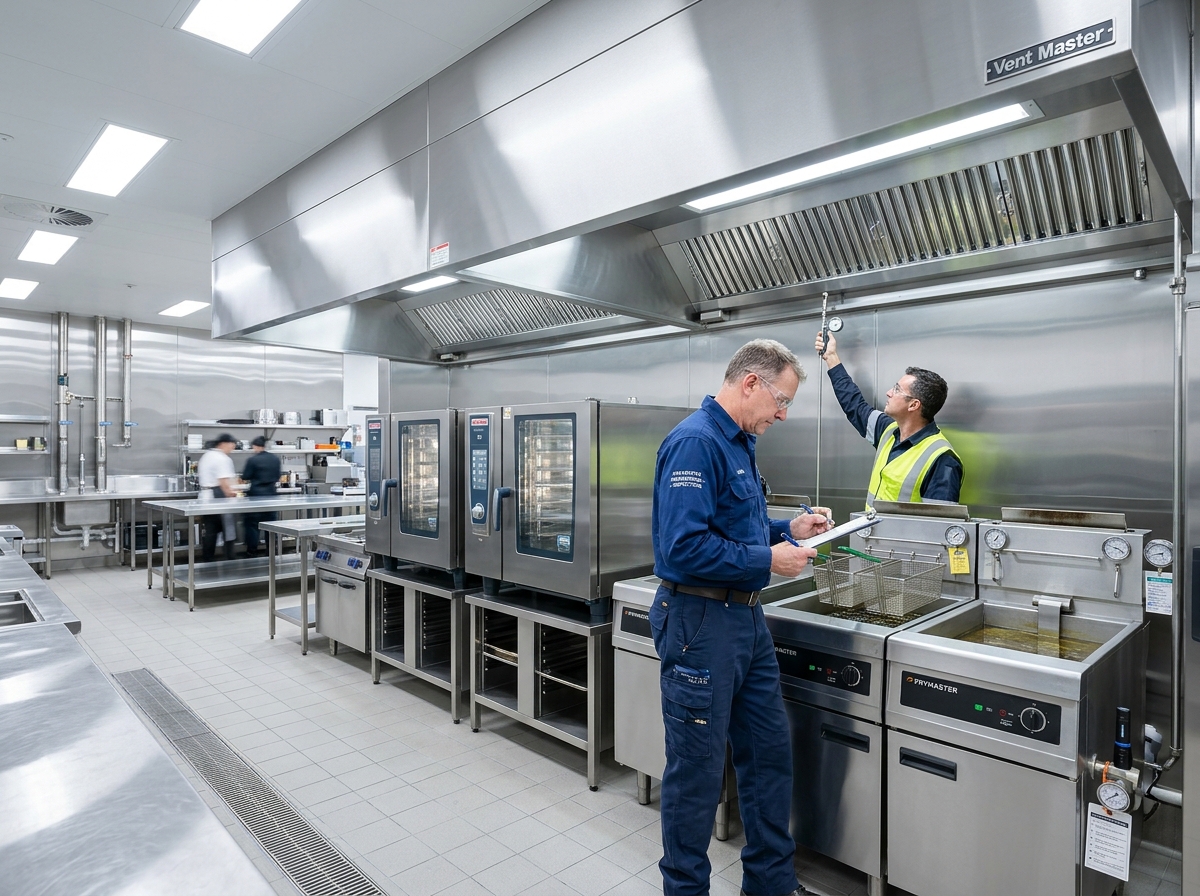
Exhaust hoods over deep fryers and charcoal grills accumulate vaporized cooking oil that oxidizes into highly flammable carbon crusts inside concealed ceiling ducts. One grease flare-up beneath an uncleaned baffle filter can race straight up to the rooftop fan in seconds.
To pass SASO and Civil Defense inspections seamlessly, commercial kitchens must satisfy four structural requirements:
1. Food-Grade 304 Stainless Construction: Hood canopies and internal exhaust ducts require continuous liquid-tight welds in 304 stainless steel at least 1.2 mm thick—eliminating leaky slip joints.
2. 45-Degree Baffle Grease Filters: Heavy metal baffle slots angled at 45° trap airborne oil droplets and drain them into removable collection trays emptied daily—never disposable mesh pads.
3. Gasketed Access Doors Every 3 Meters: Sealable inspection panels must sit every 3 meters and at every duct elbow so degreasing crews can wash internal bends mechanically up to the rooftop blower.
4. Linked Wet-Chemical Suppression: Kitchen canopies require UL-listed wet-chemical suppression nozzles (such as Ansul R-102) interlocked with the main solenoid valve to cut LPG gas flow instantly if triggered.
| Hospitality Venue Type | Hood & Duct Degreasing | Grease Trap Pumping | Gas & Suppression Audit |
|---|---|---|---|
| Fast Food, Charcoal Grills & High-Volume Fryers | Every 1 - 2 Months | Every 1 - 2 Weeks | Hydraulic Check Every 6 Months |
| Mandi, Bukhari & Traditional Catering Kitchens | Every 2 - 3 Months | Every 2 - 4 Weeks | Quarterly Solenoid Test |
| Full-Service Casual Dining Restaurants | Every 4 - 6 Months | Monthly / At 25% Oil Load | Semi-Annual Certification |
| Specialty Cafes, Bakeries & Pastry Shops | Every 6 - 12 Months | Every 2 - 3 Months | Annual Gas Line Tightness Audit |
| Hotels & Large Banquet Halls | Bi-Monthly + Daily Baffle Log | Weekly Mechanical Pump-Out | Monthly Scheduled Inspection |
Grease Trap Compliance Under Municipal Wastewater Rules
Municipalities and National Water Company inspectors strictly forbid discharging hot cooking oils or fryer residue down public drains, where cooled grease solidifies into sewer-blocking 'fatbergs'. Every commercial dish pit and floor drain requires an appropriately sized stainless steel grease trap matching peak kitchen GPM flow rates.
Never pour caustic liquid drain solvents into grease traps—they merely liquefy fats temporarily so oil congeals further downstream inside city mains. Proper compliance demands mechanical vacuum pumping and disposal logs kept on site for surprise inspections.
How Top Cleaners Guarantees Smooth Inspection Approvals
Our commercial restaurant engineering divisions across Khamis Mushait, Abha, Jazan, Bisha, and Hafar Al-Batin handle overnight alkaline foam degreasing after your closing shift—delivering stamped Balady/Civil Defense PDF reports with high-resolution before-and-after duct photos, fan belt balancing, and LPG leak testing.
Direct Service & Pricing Links
Frequently Asked Questions
Are Top Cleaners hood certificates accepted by Balady & Civil Defense?
Yes. Every degreasing service issues a stamped digital certificate complete with date stamps, chemical safety notes, and before-and-after duct photos accepted by Mumtathel and Salamah auditors.
What municipal fines apply for dirty restaurant exhaust ducts?
Penalties start at 5,000 SAR for minor neglect and climb up to 50,000 SAR with mandatory shutdown orders when heavy grease buildup creates imminent fire hazards.
How long does full canopy, duct & rooftop blower cleaning take?
Between 3 and 6 hours depending on duct length and grime density—scheduled after midnight closing so lunch and dinner service never stops.
Can we combine hood cleaning, fryer repair & pest control in one contract?
Yes. Top Cleaners bundles commercial kitchen maintenance, Balady exhaust compliance, and monthly IPM pest certificates inside one ZATCA-invoiced annual contract.