HVAC at 2,200m Altitude in Abha & Khamis Mushait: Heat-Pump & Defrost Tuning
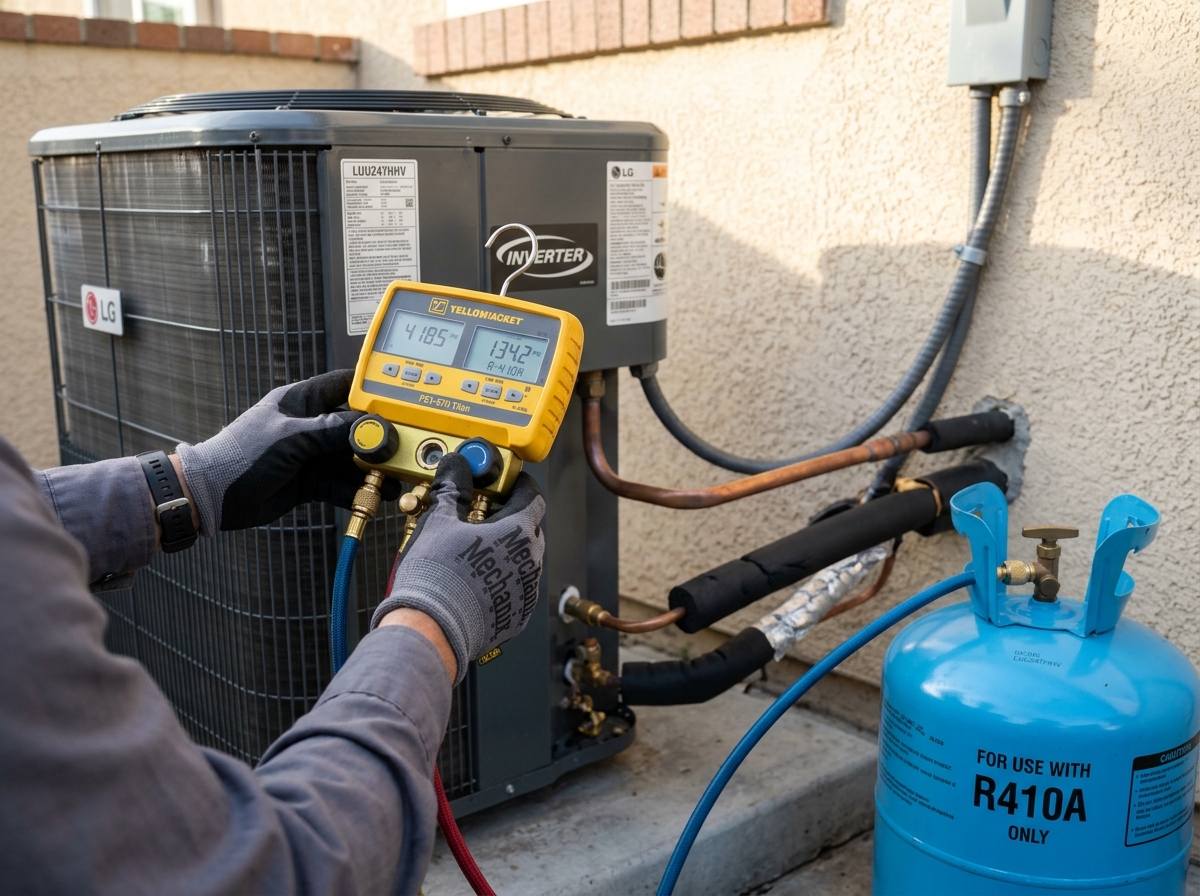
At 2,200+ meters in Abha and Khamis Mushait, thinner mountain air drops air mass flow (CFM) by ~20%, trimming rated AC output by 8–12%. Year-round cooling and winter heating also strain 4-way reversing valves and defrost thermistors, making scheduled bi-annual maintenance vital to prevent frozen outdoor coils and indoor mold odors.
Geophysical & Climate Realities Across the Asir Highlands
Cities perched across the Asir highlands—including Abha, Khamis Mushait, Ahad Rafidah, Al-Wadiyyin, and Sarat Abidah—sit between 2,000 and 2,400 meters above sea level. That altitude creates thermodynamic operating conditions completely different from coastal cities like Jazan or low-lying desert hubs like Hafar Al-Batin.
Standard atmospheric pressure falls from 101.3 kPa at sea level down to ~78 kPa in Abha, pulling dry air density down from 1.20 kg/m³ to roughly 0.96 kg/m³. Because every cubic meter pushed across an evaporator or condenser coil contains 20% less air mass, fewer molecules absorb and reject thermal energy per fan revolution. Without proper airflow calibration and refrigerant pressure verification, homeowners experience sluggish winter heating, longer compressor runtimes, and higher monthly electricity bills.
- 20% Lower Air Mass Density: Reduces nominal cooling and heating exchange by 8–12% unless fan speed (CFM) and capacity selection account for elevation.
- Sharp Diurnal & Seasonal Swings: Winter nights drop toward 2°C–5°C with frost risk while rainy summer afternoons bring saturated mountain fog.
- 12-Month Heat-Pump Workload: Unlike lowland units used only for summer cooling, Asir split ACs switch continuously between cool and heat modes year-round.
Winter Heat-Pump Mechanics & Why Outdoor Coils Ice Over
When you switch a split air conditioner to Heat Mode, an electromagnetic 4-way reversing valve reverses refrigerant direction completely. Your indoor wall blower becomes the high-temperature condenser warming the bedroom or majlis, while the rooftop outdoor condenser acts as a sub-zero evaporator extracting ambient heat from chilly night air.
During foggy winters in Abha and Khamis Mushait, outdoor temperatures near 4°C–6°C force the outdoor coil metal below freezing (-3°C to -6°C). Atmospheric mist condenses on aluminum fins and instantly freezes into an insulating ice jacket. If undisturbed, solid ice blocks airflow completely, drops suction pressure toward vacuum, and risks slugging liquid refrigerant back into the compressor.
To protect the unit, the outdoor control board relies on a calibrated Demand Defrost Thermistor mounted on the return bend of the coil. Once frost thickness drops coil temperature past the threshold, the PCB momentarily pauses the indoor fan and flips the reversing valve back into cooling mode for 3 to 8 minutes—dumping warm gas outdoors to melt ice cleanly before resuming heating.
| Engineering & Climate Variable | Abha & Khamis (+2,200 m) | Jazan Coast (Sea Level) | Hafar Al-Batin Desert |
|---|---|---|---|
| Air Pressure & Density | Thin air (0.96 kg/m³) | Dense humid air (1.20 kg/m³) | Hot dry air |
| Annual Operating Duty | 4-month winter heating + summer cooling | 10-month continuous high-humidity cooling | 8-month intense cooling at +50°C |
| Primary Mechanical Hazard | Outdoor coil icing & reversing valve wear | Marine salt fin & copper corrosion | Dust-clogged fins & thermal tripouts |
| Altitude Capacity Derating | 8% to 12% nominal BTU loss | Latent moisture cooling load loss | High ambient head-pressure loss |
| Indoor Coil Mold Risk | Very High during foggy & rainy months | Moderate to High | Low (arid indoors) |
Top Cleaners High-Altitude HVAC Maintenance Protocol
Our Asir field engineering teams based near King Fahd Road in Khamis Mushait and Al-Mansak Roundabout in Abha follow a specialized 4-step preventive protocol calibrated specifically for mountain residences, hotels, and villas:
1. 4-Way Reversing Valve & Solenoid Audit: We inspect valve temperature differentials between discharge and suction ports to verify zero internal steam bypass that quietly cripples winter heating efficiency.
2. Defrost Thermistor Resistance Calibration: Technicians check ohmic resistance values on outdoor coil and ambient sensors against factory curves so automatic defrost engages promptly before frost stalls the fan blades.
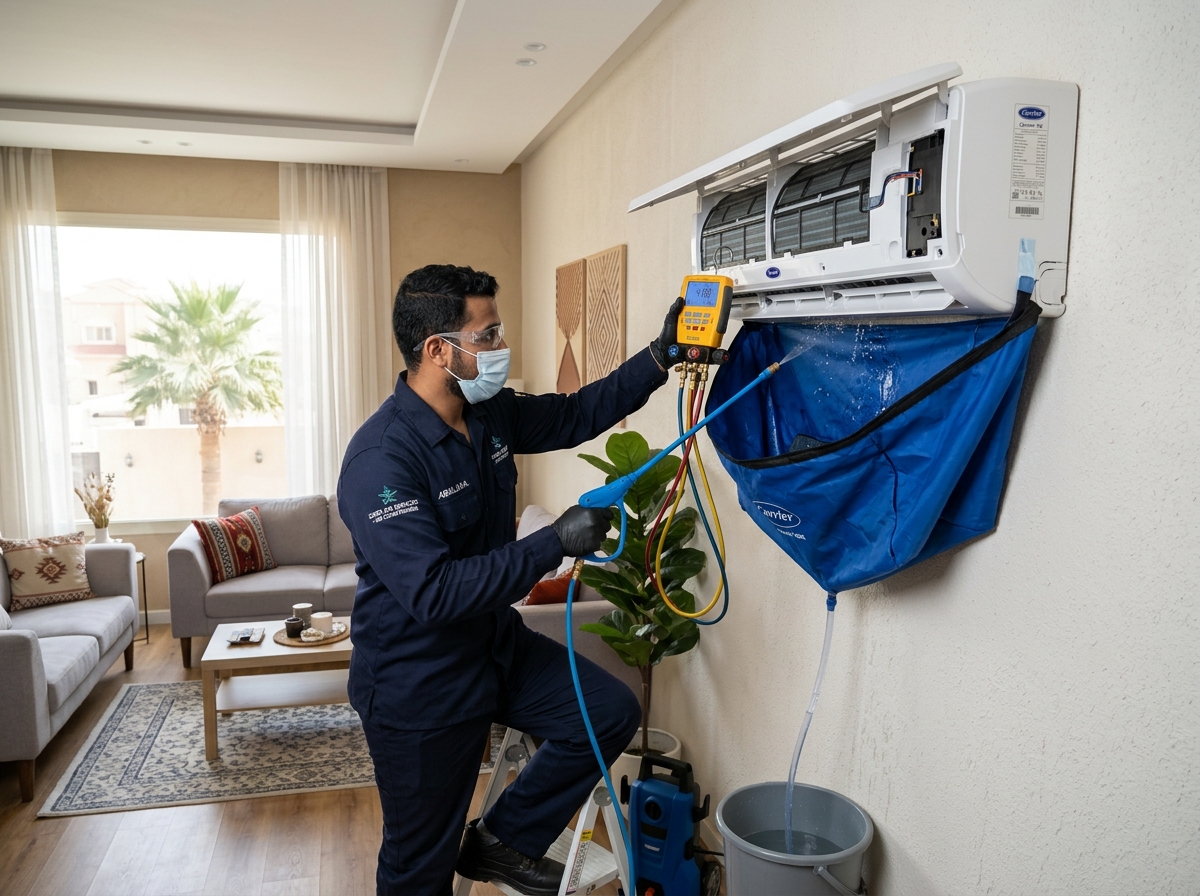
3. Anti-Fungal Evaporator & Drain Sanitization: Abha fog spores colonize damp indoor blower wheels rapidly, causing earthy odors. We perform enclosed 120-bar coil flushing using botanical antimicrobial cleaners plus nitrogen drain purging.
4. Inverter PCB Conformal Moisture Protection: Mountain rain and evening mist frequently corrode exposed rooftop inverter boards; we solvent-clean traces and apply insulating dielectric barrier spray to stop sudden CH05 and E1 communication errors.
Direct Service & Pricing Links
Frequently Asked Questions
Why does my Abha AC suddenly pause warm air for 5 minutes on cold nights?
That brief pause indicates the normal automatic Defrost Cycle. The indoor fan stops so cool air does not blow on occupants while the outdoor unit reverses heat briefly to melt frost from exterior fins.
Should homeowners in Abha and Khamis Mushait buy slightly larger BTU units?
Yes—our engineers recommend sizing up cooling and heating capacity by 10% to 15% (for example, choosing 24,000 BTU instead of 18,000 BTU in wide high-ceiling majlis rooms) to offset lower air density at 2,200 meters.
What causes musty wet-earth odors when turning on split ACs in Asir?
Persistent fog humidity feeds dark microbial biofilm across indoor squirrel-cage blowers and drain pans. Enclosed Karcher washing paired with antimicrobial fogging eliminates odors safely indoors.
When is the best schedule for preventive AC maintenance in Khamis Mushait?
Twice yearly: once in April to flush dry spring dust before summer, and once in October to test 4-way valves, defrost sensors, and heating amp draw before winter.